Crypto Payments vs Stripe: Can Crypto Replace Card Processing for Your Business?
Stripe is the default for most online merchants — but at 2.9% per transaction, a $100,000/month business hands over $35,000 a year in fees. Crypto gateways charge nothing per transaction. This guide compares both honestly: where crypto wins, where Stripe wins, and who should switch.

Best No-KYC Crypto Payment Gateway (2026 Comparison)
Most crypto payment gateways demand identity documents before you see a single payment. We compared every major option to find which gateways actually let you start without KYC — and why the answer comes down to whether the gateway holds your money or not.

Hardware Wallets vs Software Wallets: What Merchants Actually Need
Ledger, Trezor, MetaMask, and a mobile app are all called wallets — but they offer radically different security guarantees. Here is an honest breakdown based on the threat model that actually applies to merchants.

Bitcoin vs USDT: Which Crypto Should You Accept First?
Both are popular, but they serve different purposes at checkout. Here is how to decide which to enable first for your store.

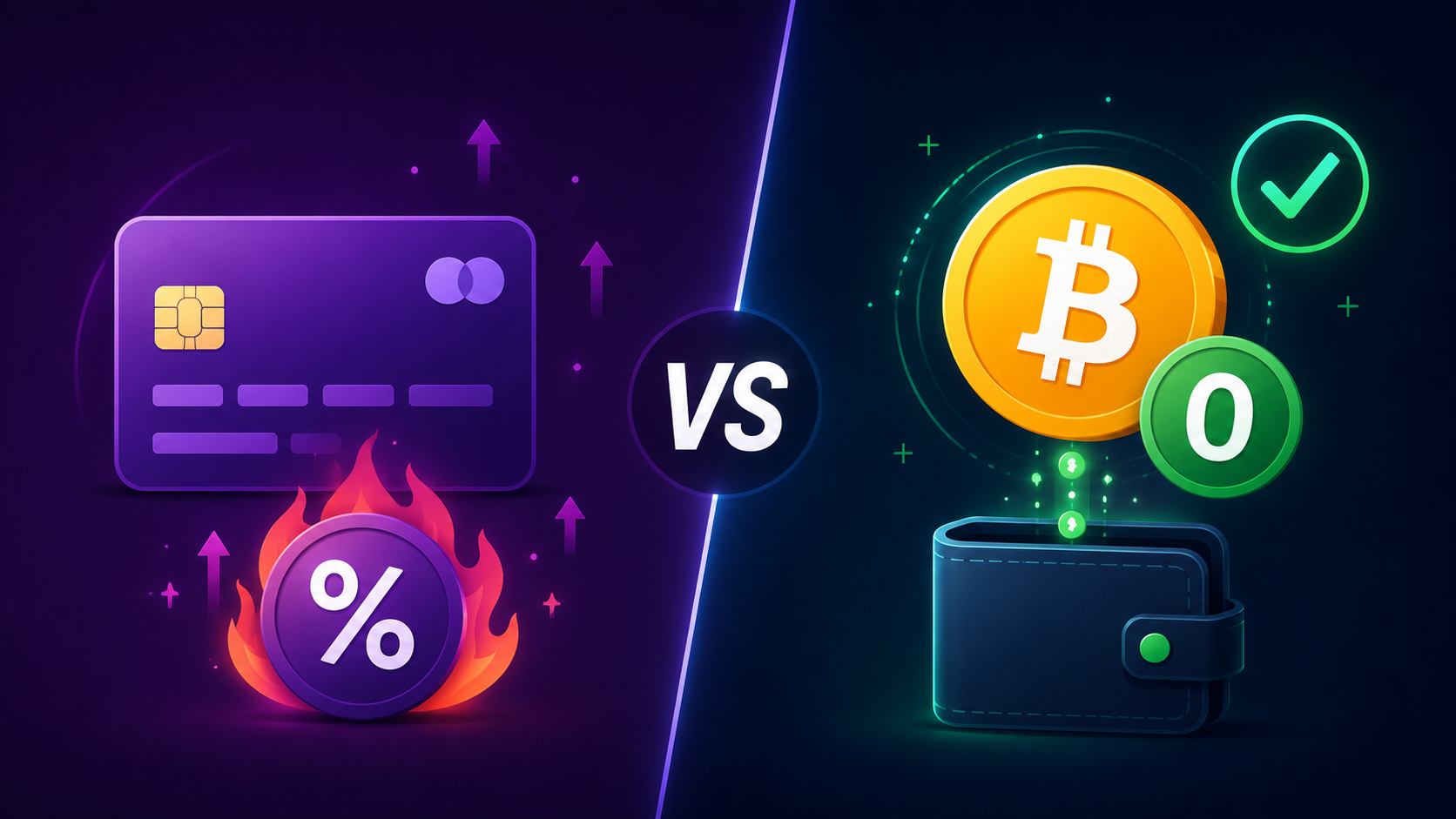
Crypto Payments vs Credit Cards: The True Cost Comparison
Card fees, chargebacks, holds, and fraud add up. Here is an honest side-by-side comparison for merchants.

Non-Custodial vs Custodial Crypto Payment Processors: What Is the Difference?
Not all crypto payment processors work the same way. The custody model determines who actually controls your funds — and the answer matters more than you think.