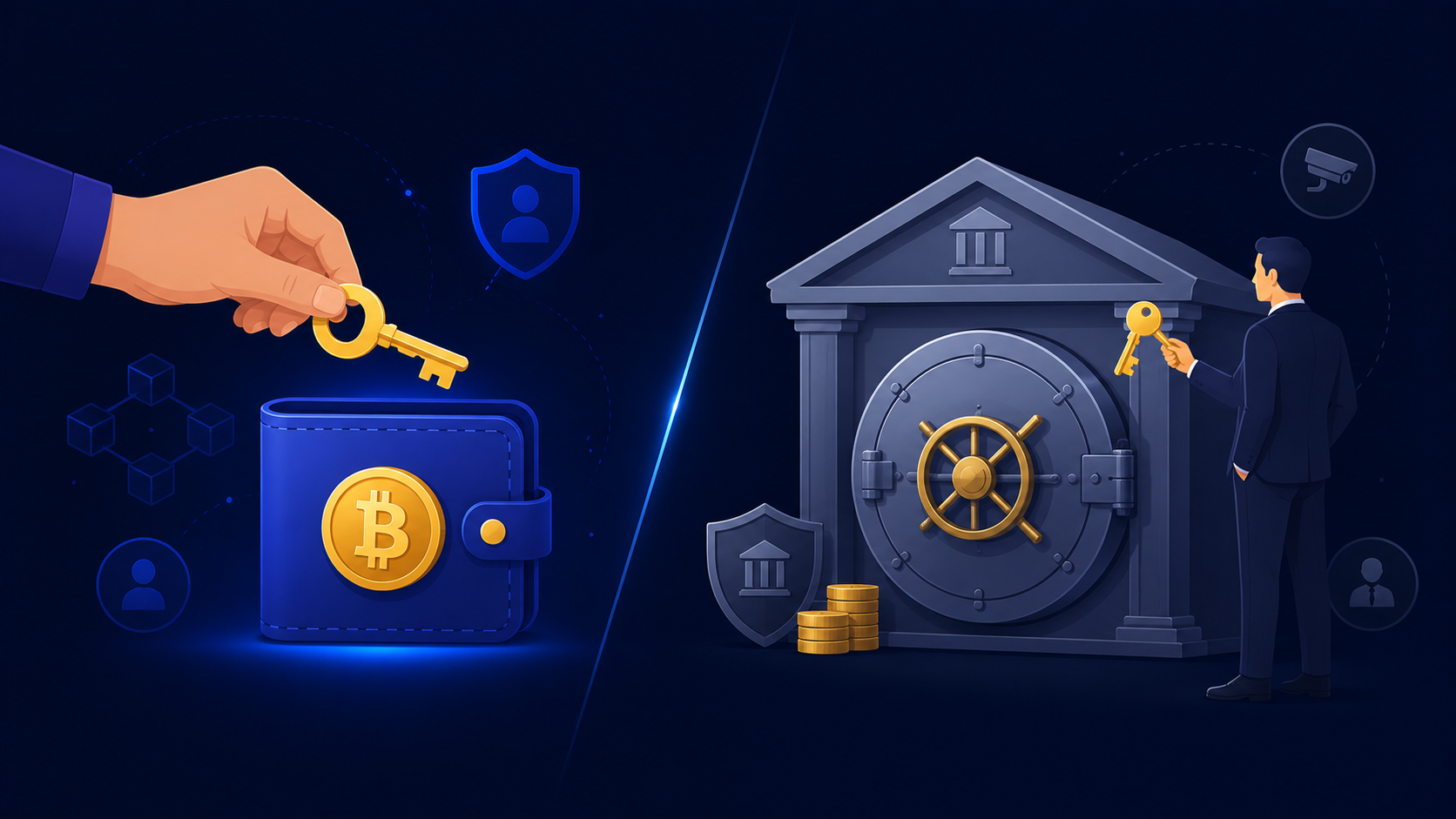
The Core Distinction
When you accept crypto through a payment processor, one of two things happens to the funds: they go directly into your wallet (non-custodial), or they go into the processor''s wallet and you withdraw later (custodial).
How Custodial Processors Work
With a custodial processor, you create an account, and the processor generates wallet addresses on your behalf. When customers pay, funds land in the processor''s wallets. You log in to the dashboard and request a withdrawal, which the processor sends to your bank or personal wallet — usually after a delay.
Examples: BitPay, Coinbase Commerce (legacy), CoinGate.
The risk: you do not control the private keys. You are trusting the processor to hold your money, process your withdrawal, and remain solvent. If they get hacked, go bankrupt, or freeze your account, your funds are at risk.
How Non-Custodial Processors Work
With a non-custodial processor, you provide your own wallet addresses. The processor generates unique deposit addresses derived from your keys, monitors the blockchain, and sends you webhooks. Funds go directly from the customer to your wallet — the processor never holds them.
Examples: CryptoGate, BTCPay Server.
The advantage: no counterparty risk. Even if the payment processor shuts down tomorrow, your funds are already in your wallet. The processor never had access to them.
Side-by-Side Comparison
| Custodial | Non-Custodial | |
|---|---|---|
| Who holds funds | The processor | You (your wallet) |
| Withdrawal needed? | Yes | No — already in your wallet |
| Settlement time | 1–5 business days | On-chain confirmation (minutes) |
| Account freeze risk | Yes | No |
| KYC required | Usually yes | Usually no |
| Setup complexity | Low | Low to medium |
When Custodial Makes Sense
Custodial processors can be appropriate for businesses that want automatic fiat conversion, do not want to manage their own wallets, or are operating in a highly regulated environment where having a licensed custodian provides legal clarity.
When Non-Custodial Is the Right Choice
Non-custodial is better for most merchants: you want immediate access to funds, you do not want KYC requirements, you sell in categories that custodial processors restrict (digital goods, international), or you simply prefer not to trust a third party with your revenue.
Summary
The key question is: do you want a company holding your money, or do you want funds going directly to your wallet? Non-custodial processors give you the same payment infrastructure without the counterparty risk. CryptoGate is non-custodial — your wallet, your keys, your funds.