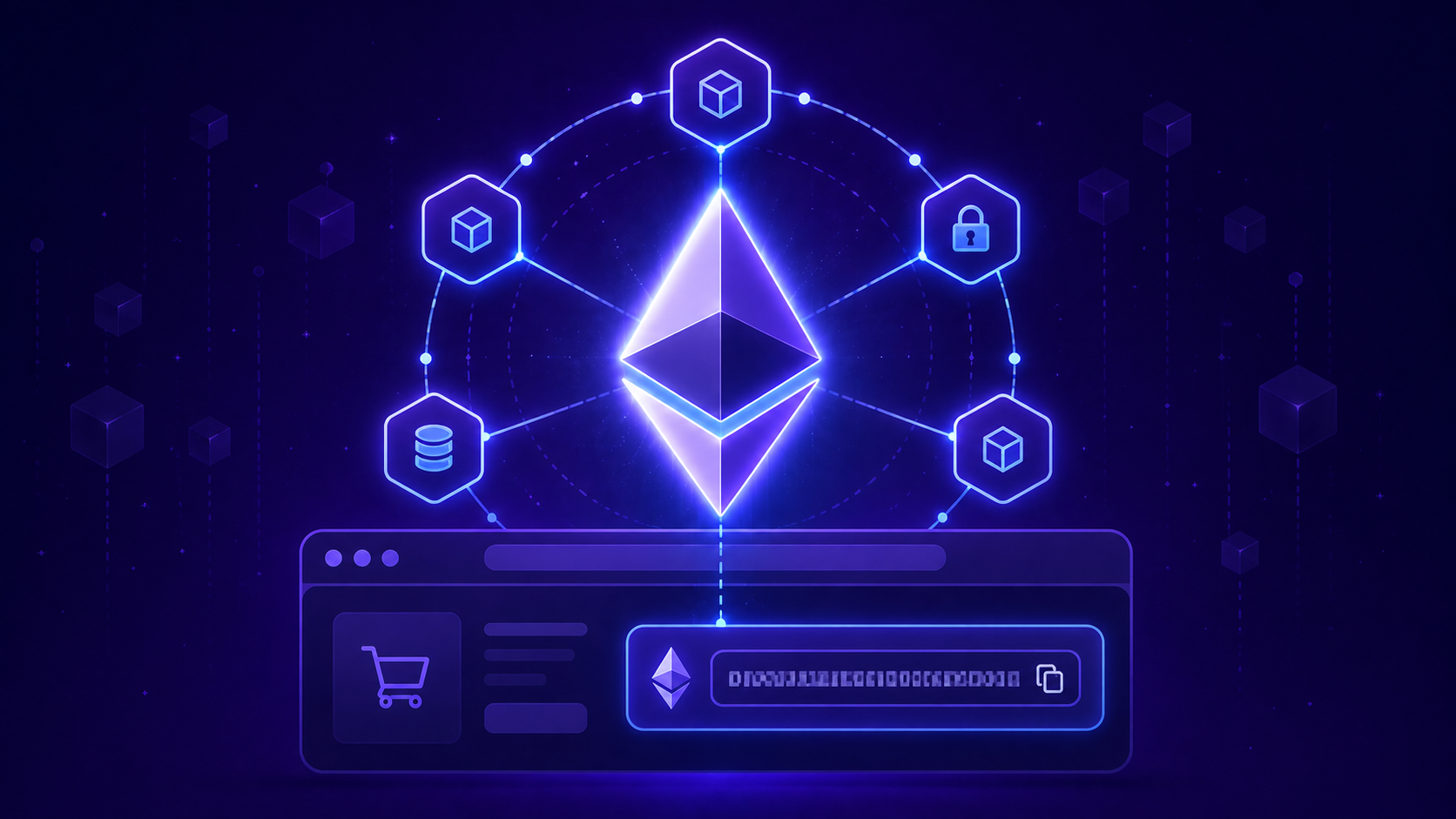
Why Accept Ethereum Specifically?
Ethereum (ETH) is the most actively used blockchain in the world. Its user base skews younger and tech-forward — exactly the demographic most comfortable paying with crypto. Accepting ETH specifically makes sense because:
- ETH is held by millions of DeFi, NFT, and Web3 participants who actively want to spend it
- ETH transactions are faster than Bitcoin — typically confirming in 15 seconds to 5 minutes
- ETH is the gateway currency for the ERC-20 token ecosystem (USDT, USDC, DAI)
- Customers in the Ethereum ecosystem are high-value, frequent online spenders
ETH vs BTC for Merchant Payments: Key Differences
| Ethereum (ETH) | Bitcoin (BTC) | |
|---|---|---|
| Block time | ~12 seconds | ~10 minutes |
| Confirmation speed | Seconds to minutes | 10–60 minutes |
| Network fee | $1–20 (gas, fluctuates) | $1–8 |
| Fee predictability | Low — gas spikes during congestion | Moderate |
| Best for | Tech-forward buyers, Web3 users | Broadest crypto audience |
The main caveat with Ethereum: gas fees spike dramatically during periods of network congestion. A transaction that costs $2 normally can cost $50 during a popular NFT mint or market event. For small purchases, this can make ETH impractical. Offer Litecoin or DOGE as a low-fee alternative for purchases under $50.
Setting Up Ethereum Payments with CryptoGate
Step 1: Get Your Ethereum Wallet xPub
CryptoGate uses your wallet's xPub to derive unique Ethereum addresses per transaction. Supported wallets:
- Ledger: Connect to Ledger Live → Ethereum account → Settings → Advanced → Extended public key
- Trezor: Trezor Suite → Ethereum account → Public key tab
- MetaMask: MetaMask is not an HD wallet by default and does not export a standard xPub compatible with CryptoGate's derivation. Use a hardware wallet or Electrum (for ETH via Ethereum-compatible path) instead.
Step 2: Create Your CryptoGate Account
Sign up at cryptogate.live — no KYC required. Enter your Ethereum xPub when configuring your wallet. Enable ETH as an accepted currency in your settings.
Step 3: Create an ETH Transaction at Checkout
POST https://api.cryptogate.live/v1/transactions
Authorization: Bearer YOUR_API_KEY

{
  "amount": "75.00",
  "currency": "USD",
  "crypto": "ETH",
  "metadata": { "order_id": "ORD-5512" }
}
CryptoGate calculates the ETH amount based on the live exchange rate, locks it for the payment window, and returns a unique Ethereum address and a hosted payment URL.
Step 4: Display and Monitor
Show the customer their ETH payment address and amount, or redirect to the CryptoGate hosted page. ETH transactions confirm in seconds to a few minutes. CryptoGate sends webhook events at each stage:
payment.pending— transaction in the Ethereum mempoolpayment.awaiting_confirmation— first block confirmationpayment.completed— sufficient confirmations, payment final
How Many Confirmations Should You Require for ETH?
Ethereum's Proof of Stake consensus makes 1-block finality much more reliable than Bitcoin's. General guidance:
- Low-value orders (under $200): 1–3 confirmations (~12–36 seconds)
- Medium orders ($200–$2,000): 6–12 confirmations (~1–2 minutes)
- High-value orders ($2,000+): 30+ confirmations (~6 minutes) for extra assurance
What About ERC-20 Tokens (USDT, USDC)?
ERC-20 tokens run on the Ethereum network and require ETH to pay gas fees for each transaction. USDT and USDC stablecoins are the most commonly used ERC-20 tokens for payments. ERC-20 token support is on CryptoGate's roadmap — check the dashboard for availability.
The Gas Fee Problem: How to Address It With Customers
Gas fees are paid by the customer, not you — but a $15 gas fee on a $30 purchase is a bad experience. Be transparent:
- Display current estimated gas fees at checkout before the customer commits
- For small purchases, offer Litecoin or DOGE as lower-fee alternatives
- Consider setting a minimum order value for ETH payments (e.g., $50) to keep gas fees proportional
Who Should Prioritise ETH Support?
ETH is the right choice to prioritise if your customers are:
- Active in the NFT, DeFi, or Web3 ecosystem
- Developers and technical users (ETH is the developer-preferred chain)
- Buyers of digital goods, memberships, or software licences
- International users in markets where ETH is more accessible than BTC
For general e-commerce targeting a broad audience, lead with Bitcoin and add ETH as a secondary option.
Get Started Accepting Ethereum
Add Ethereum checkout to your website with CryptoGate — free account, no KYC, direct-to-wallet settlement. Your ETH goes to your wallet the moment the transaction confirms. No gateway holds your funds, ever.